Chapel Conversion – Simplicity, Function and the Methodist Ethos
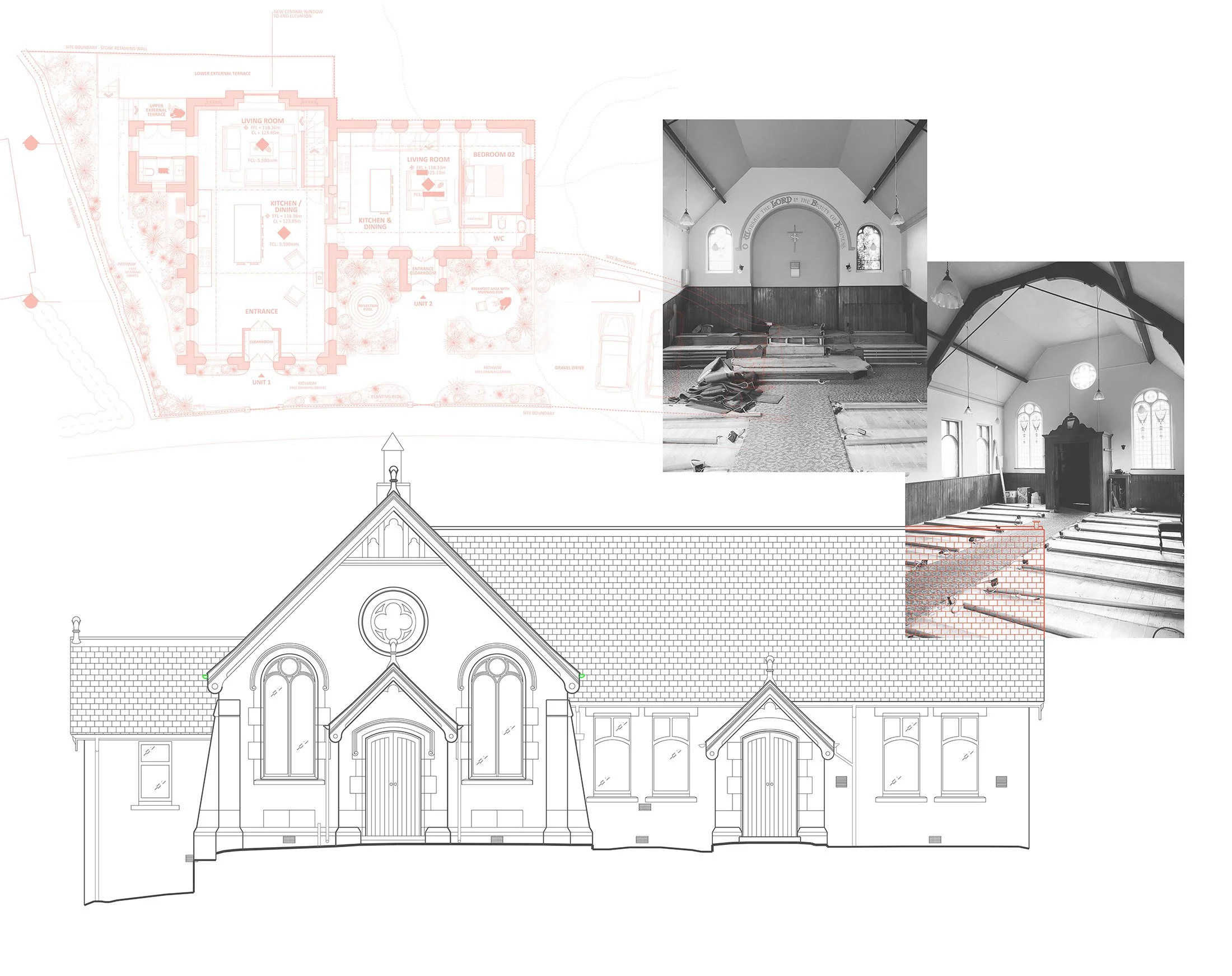
A Methodist church is built to be functional and accessible, to emphasise utility over ornamentation. It is not about the decorative. It has a clear purpose: to gather a congregation around the spoken word, with nothing in the space to distract from it.
When we were asked to convert a Primitive Methodist chapel on the edge of the Peak District into residential accommodation, that was our starting point.
The chapel was early 20th Century, constructed from local stone, with a traditional gabled roof, a modest symmetrical façade, and stained glass windows designed not to illustrate scripture but to illuminate. It opened for worship in 1910 and had stood largely unchanged since, but by the time it was purchased by our clients at auction, it had faded into disuse and disrepair.
_________________________________________
Design Principles
Before we started drawing any plans, we established a set of design principles rooted in the building's own ethos.
The conversion was to maintain the spirit of Methodist architecture through simplicity, clarity, honesty of materials and a restrained palette. Exposed timbers and original stone would be retained where possible. New materials would need to either complement the existing fabric in tone and texture, or be clearly read as modern additions through sympathetic contrast.
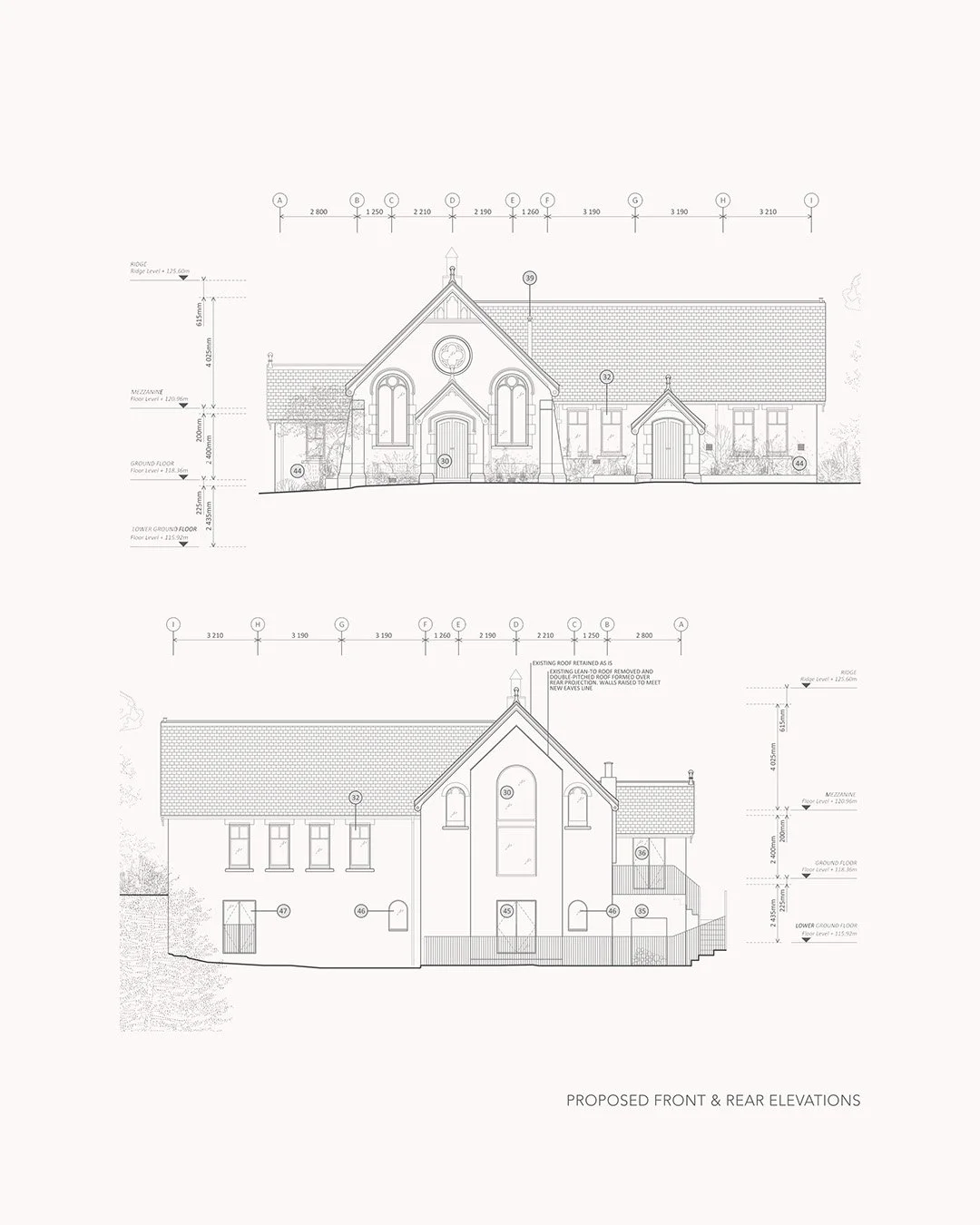
The windows were impressive and integral. We wanted to ensure these remained intact, with no structural interruptions that compromised their form or symbolism, which meant any new interventions would have to work around these openings.
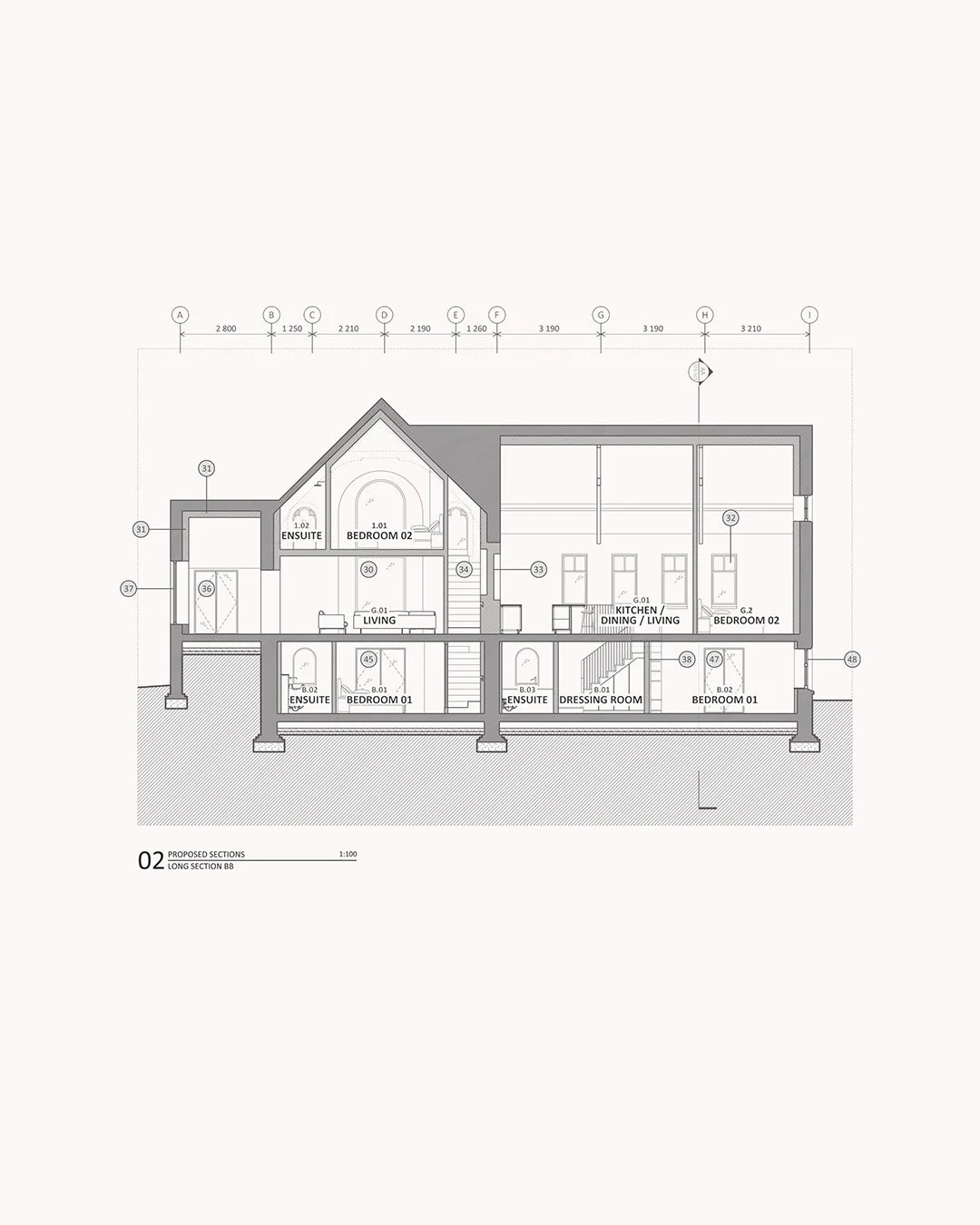
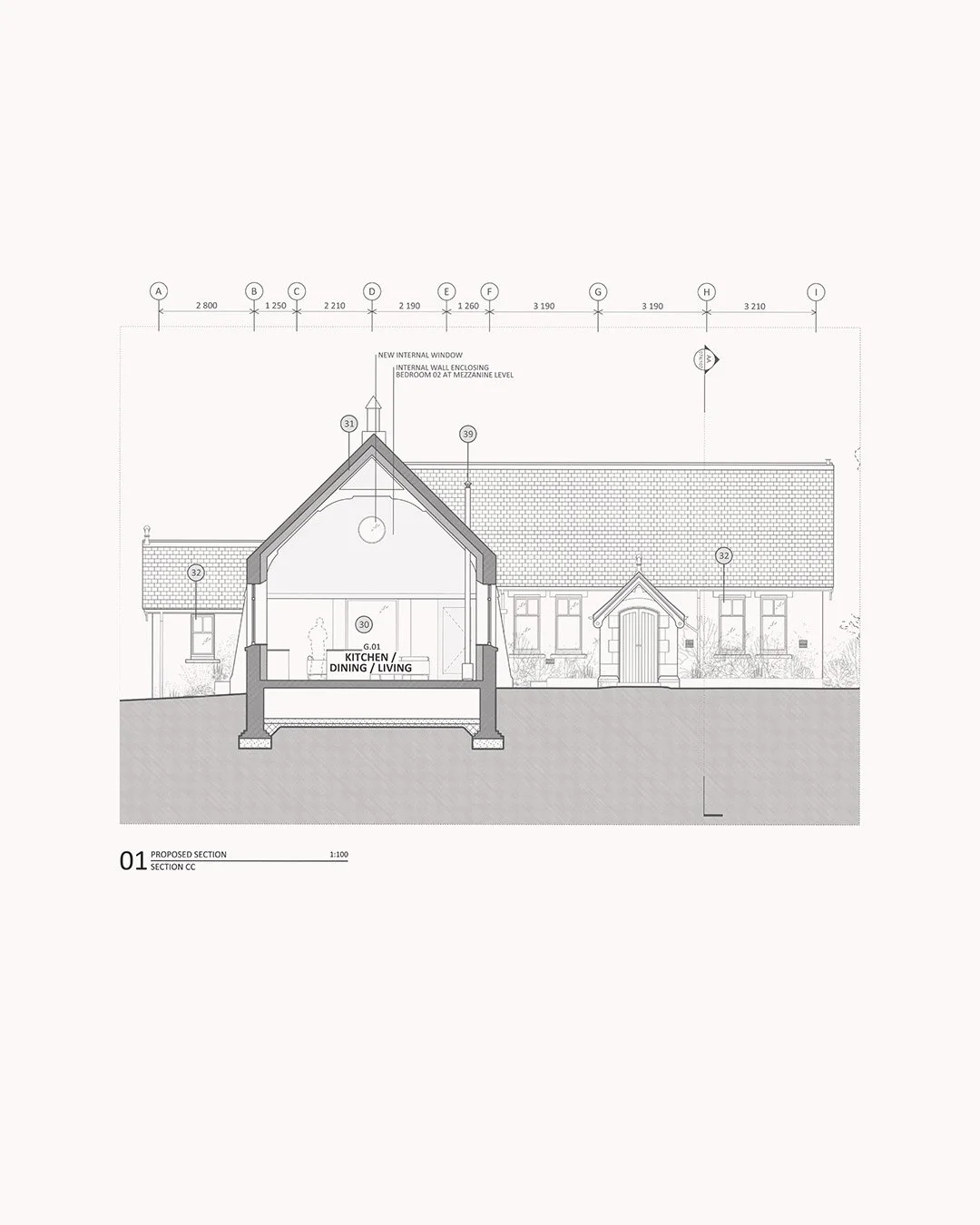
As Methodist chapels were conceived as single-volume spaces for communal worship, introducing new levels would require care. Any mezzanines or partial upper floors would need to be positioned to maintain sightlines to key architectural features – the windows, the entrance, the roof beams – ensuring that the sense of openness, height and light could be preserved while enhancing the usability of the space.
_________________________________________
Appraisal and Constraints
Although the building is not listed and sits just outside the Peak District National Park boundary, as a former Methodist place of worship, significant changes would nevertheless require engagement with the Methodist Church's Connexional Conservation Officer.
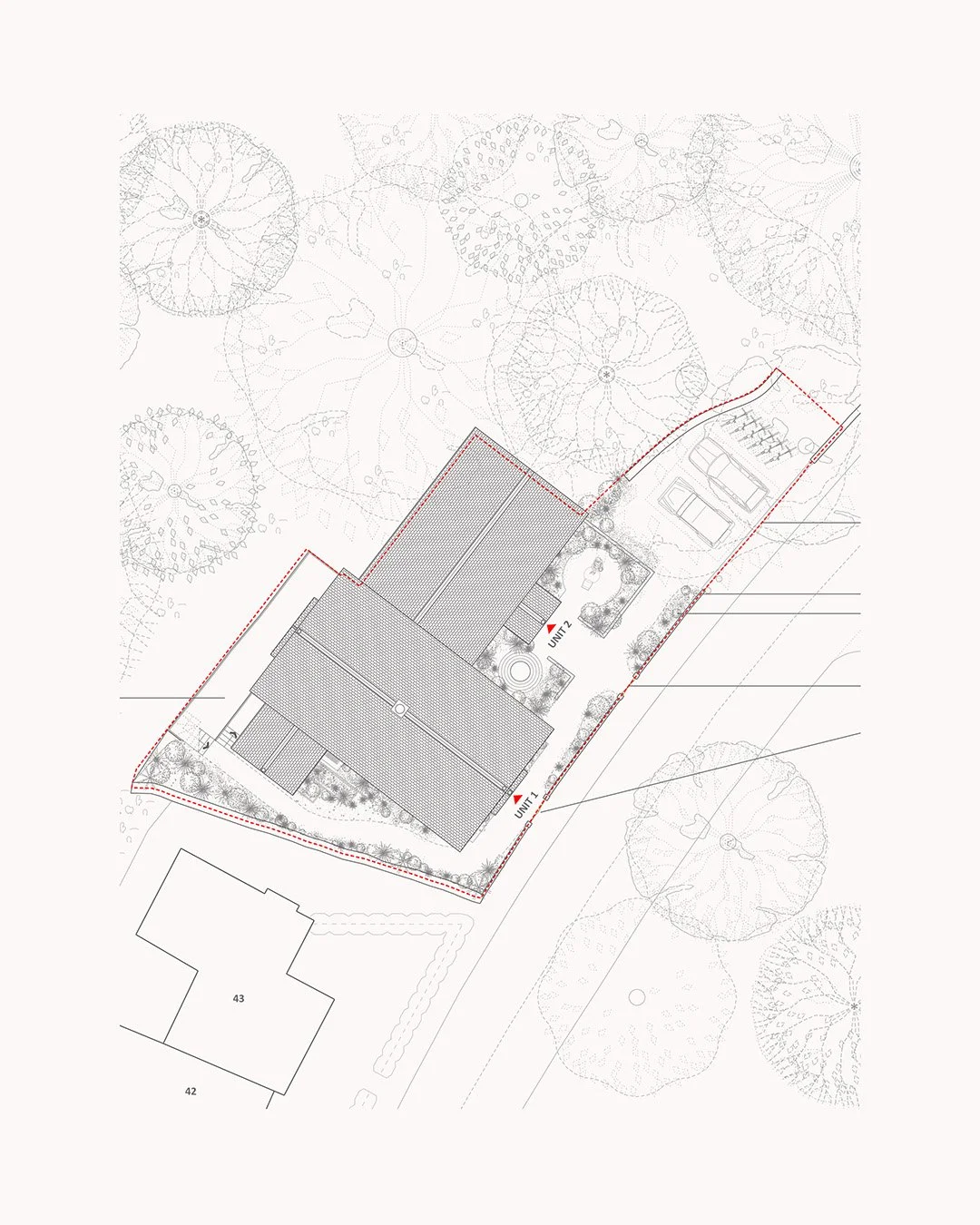
Our site analysis highlighted a busy road to the front that made vehicle access difficult, a steep drop to the rear, trees that provided shade but blocked views and sunlight to three sides, and limited opportunity for on-site parking. Despite its beautiful setting within a woodland and on the cusp of the Peak District, the building benefited from no views, the existing windows were positioned high and the glazing was obscured.
Parking would be particularly tricky. The area available for cars to park on site was limited but provision would still need to comply with Derbyshire Dales Local Plan Policy HC21 and Derbyshire County Council's parking guidance, and the number of spaces needed would be dependent on the final configuration chosen.
_________________________________________
Feasibility
The brief asked us to maximise occupancy without compromising the interior - all within the existing building envelope. We explored six configurations, ranging from a single four-bedroom home to two self-contained units of varying sizes, with and without connecting accommodation. All proposals exceeded the minimum Gross Internal Areas required under the Nationally Described Space Standard, which is adopted by Derbyshire Dales District Council and applies to residential conversions as well as new build.
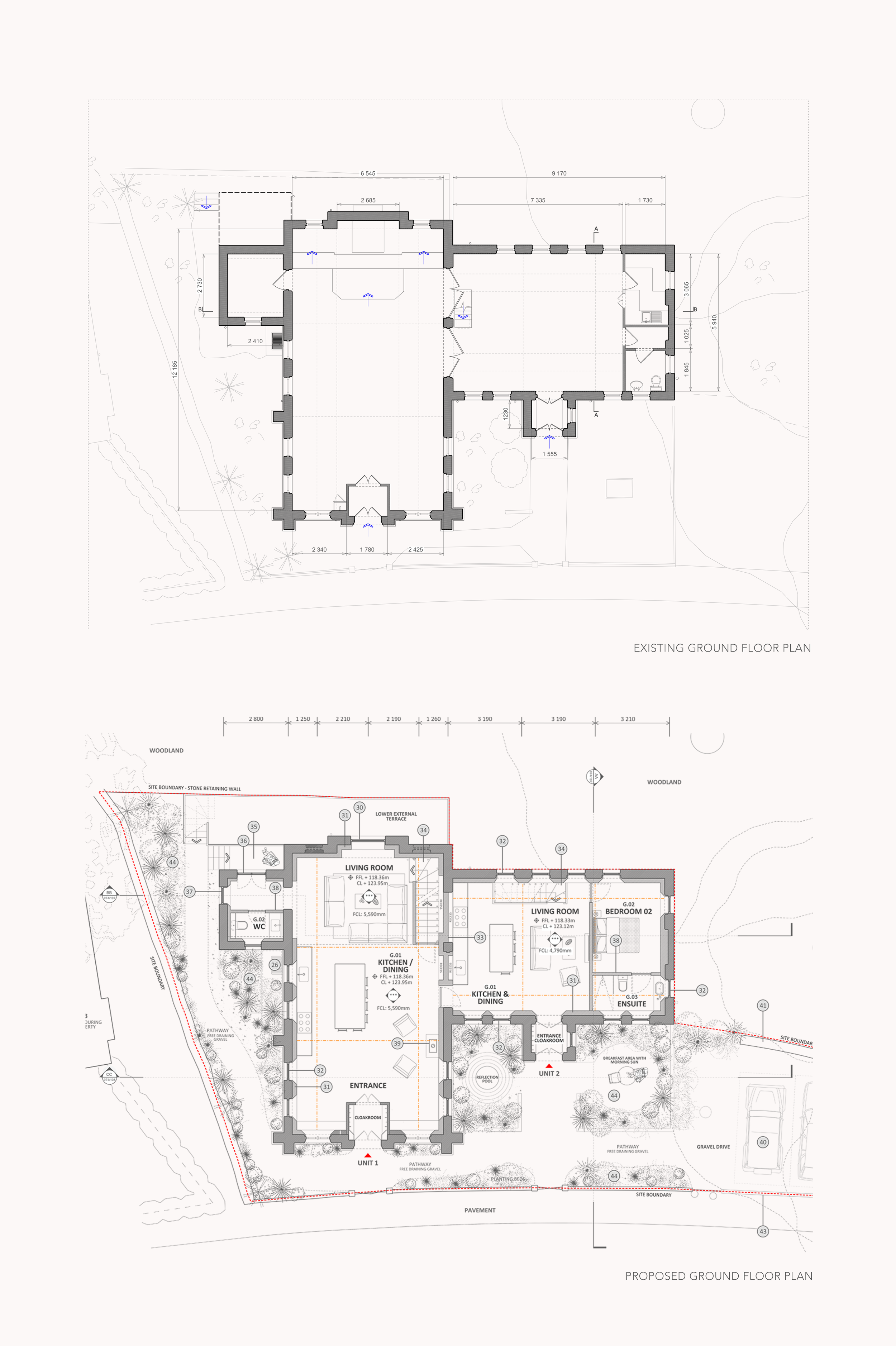
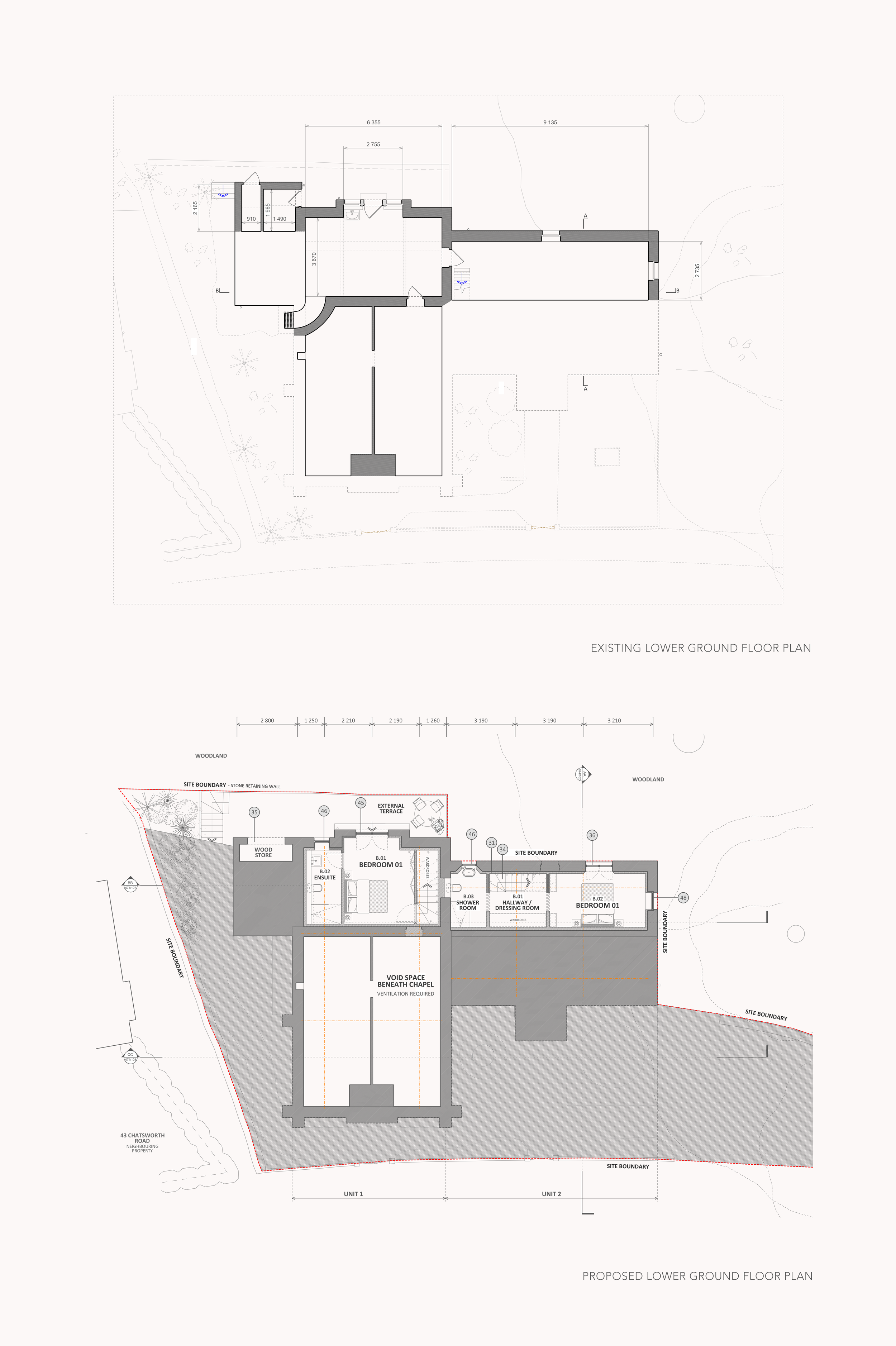
The configuration selected by the developer was our option for two interconnecting units that could be used either independently or together as a 4-bed holiday let, maximising flexibility.
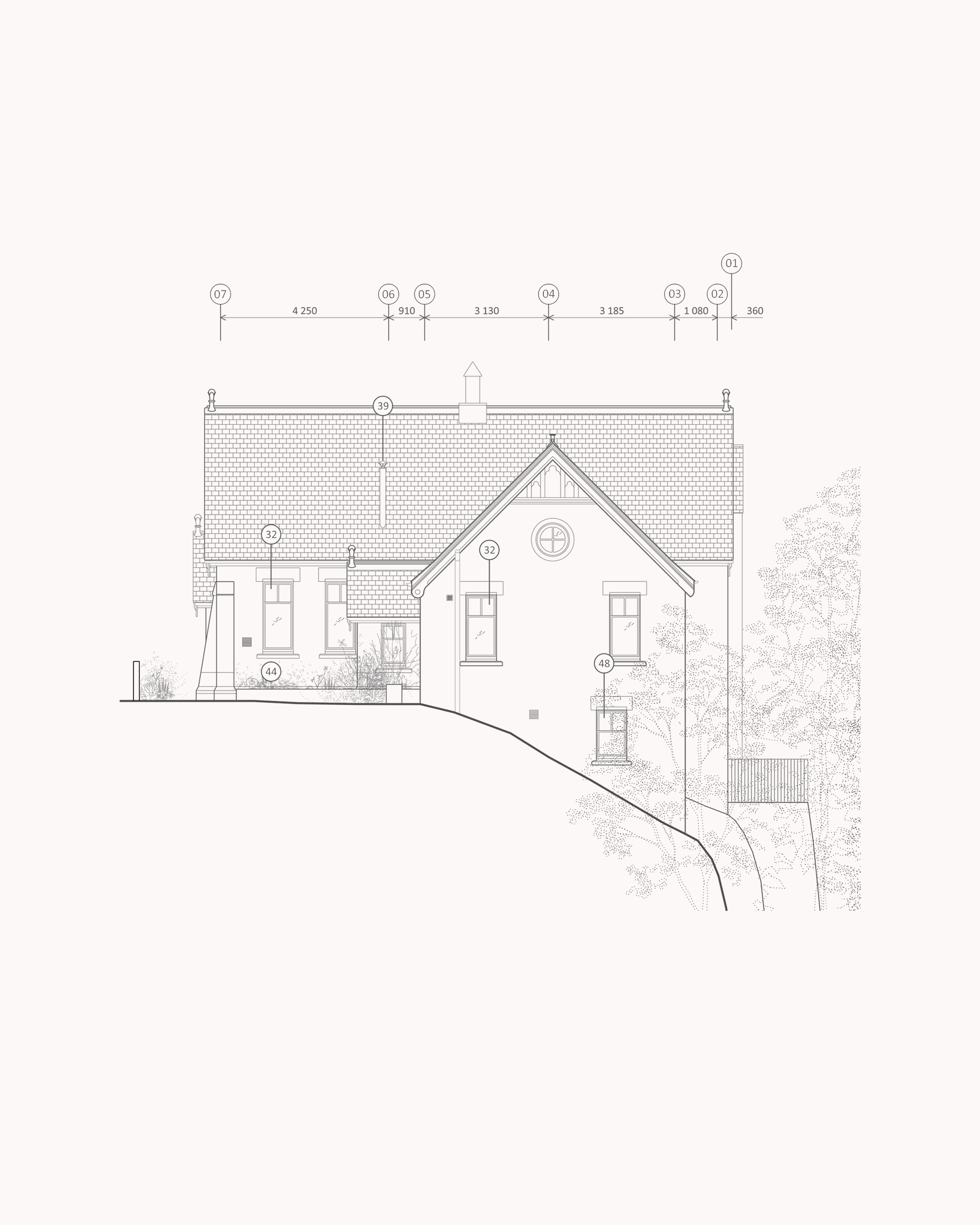
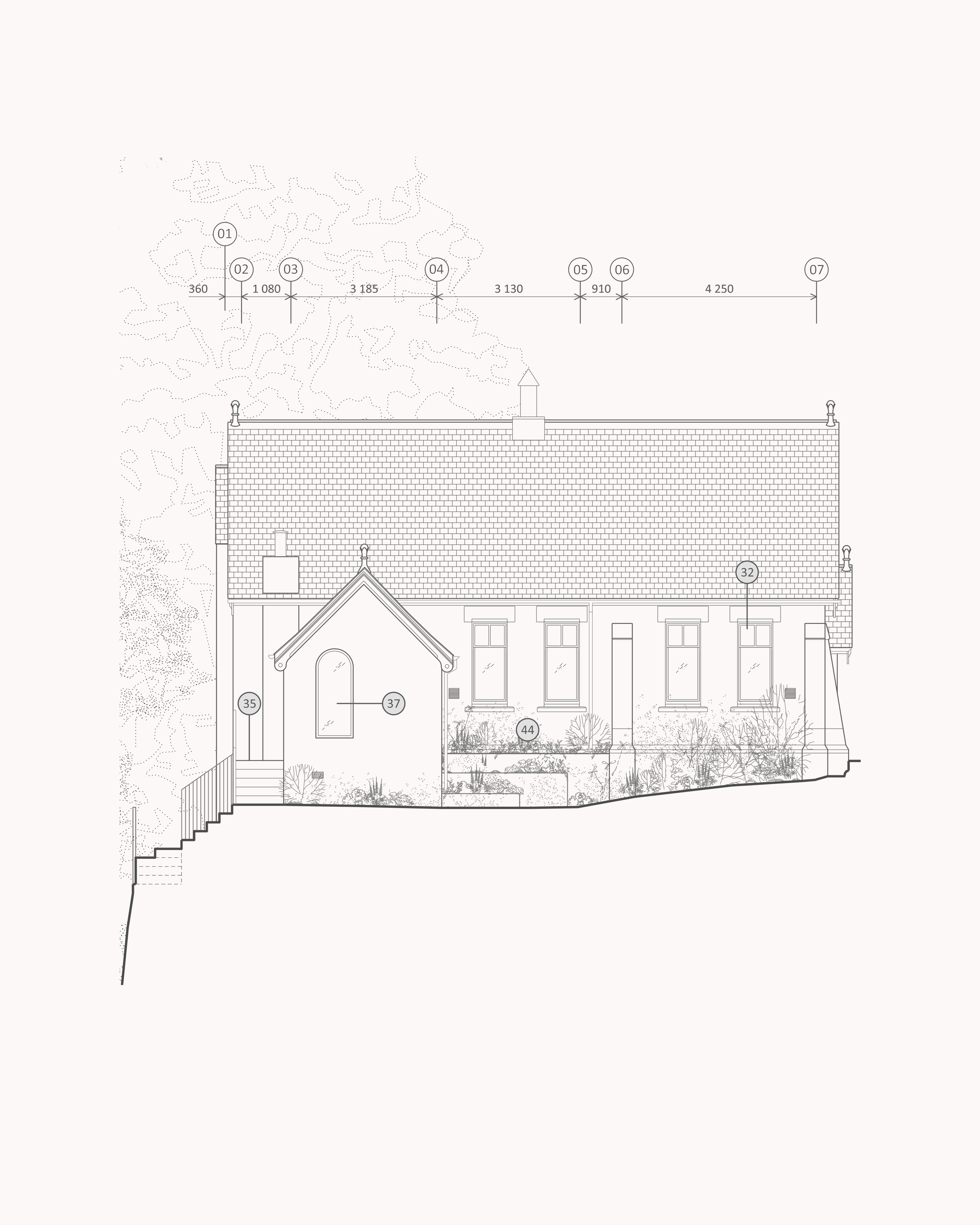
In this option, the chapel became Unit 1 and had two bedrooms – one on the lower-ground floor and one on a new mezzanine level above the former altar and apse. This layout kept the former chapel open, and the original sightlines and proportions intact. We proposed a new opening in the rear elevation to give views out to the dense woodland beyond.
The former annex became Unit 2, dividing the ground floor into an open-plan living room/kitchen and and enclosed bedroom and ensuite, with an additional bedroom on the lower-ground floor, where we designed a new opening to allow views out.
For internal wall insulation, we proposed breathable wood fibre board with lime plaster finish. The water vapour-open construction works with the building's solid stone walls rather than against them, preventing damp and maintaining a healthy internal climate. It is also a more sustainable and appropriate option for a building of this age.
_________________________________________
The Next Stage
At the time of writing, the project sits at the conclusion of RIBA Stage 2 – Concept Design. It is currently paused as the client reviews their longer-term intentions for the property – whether to proceed with the development, bring it back to market or first secure planning consent and then sell.
The next step would be to progress into RIBA Stage 3, refining the design for a planning application and engaging with the relevant authorities. For now, it remains a resolved and carefully considered proposal, ready to be taken forward when the client is ready.
It’s a project we feel privileged to have worked on, and we are hopeful that the Chapel, which has meant so much to this rural community in the past, will now get to have an appropriately graceful future.
_________________________________________
If you’d like to talk about a similar project or site, email us at info@sjw-architects.com. We work with developers and private clients on heritage conversion projects across Sheffield, the Peak District and surrounding areas. There are further examples on our Projects page and more information about our process on our Services page.